Animation Studio Brink Helsinki blog post featured image: technical animation

Technical Animation

Technical Animation: Bringing Machines to Life in 3D

In the world of animation, character animation often takes the spotlight — breathing life into humans, animals, monsters, and other organic forms. But alongside these expressive, living beings exists another fascinating branch of the craft: technical animation.

Technical animation focuses on mechanical, industrial, and other non-organic elements — from vehicles and robotics to factory machinery and futuristic devices. While these can also be given personality (as in the classic animated cars and trains of the golden age), the emphasis here is often on realism, precision, and function.

Close up image of ISO selector of the Zeiss ZX1 with the inner workings of the camera exposed. Still image from a product animation we made for Zeiss.

Modern day requirements for technical animation can be quite exciting with physical product breakdown animations only possible using 3D animation – a still image from Zeiss Case Study.

From Bouncy Cars to Rigid Machines

In traditional 2D animation, even cars and machines were often drawn with a soft, bendy expressiveness. A steam train might puff along with a spring in its step, or a car could leap and squash like a cartoon character.

Today, with 3D animation and the demand for realism in film, games, product marketing, and simulations, the focus has shifted for many productions toward accurate, rigid-body motion. This doesn’t mean the animation has to feel lifeless — in fact, mechanical animation can be full of appeal and style — but the motion must stay grounded in how the object would realistically function.

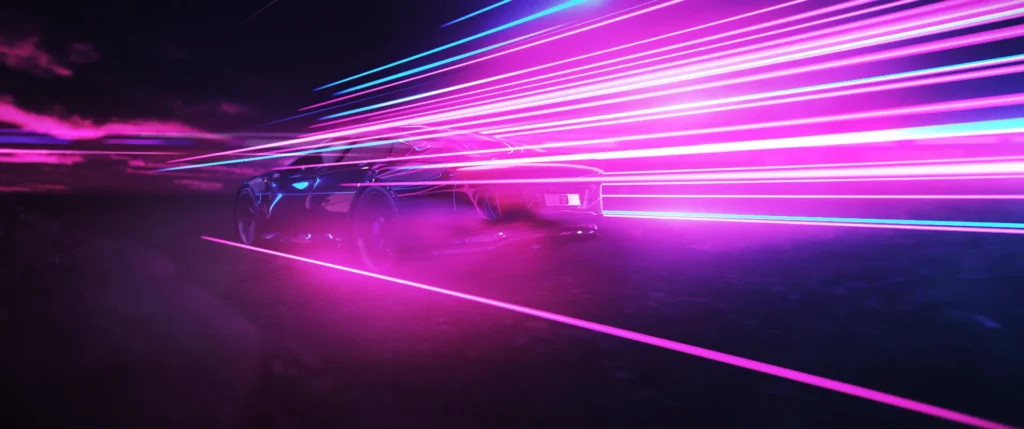
styleframe for qt's Outrun Automotive Industry Animation production demonstrating light trail visual effects.

Various vehicles are a classic subject for technical animation – a styleframe from our Case Study for Qt Automotive.

Why Physics Knowledge Matters

Animating a modern fighter jet with vertical take-off and landing capabilities may seem daunting — but with the abundance of real-world reference material, it’s possible to match reality closely.
However, when creating something that has no direct reference — a sci-fi spacecraft, an alien machine, or a fictional weapon system — the challenge increases. Without understanding the basic physics behind movement, propulsion, and material behavior, the animation can quickly lose credibility.

To animate technical subjects convincingly, animators often need to understand:

  • Mass and Weight – Heavier objects require more force to accelerate and decelerate.

  • Energy Transfer – How force moves through mechanical systems.

  • Friction and Resistance – How surfaces interact and slow motion over time.

  • Aerodynamics – How air resistance shapes motion and stability.

  • Material Properties – How different substances flex, vibrate, or break under stress.

An example of a technical animation that is in the category of motion graphics.

The Overlap with Animation Principles

Many of the classical animation principles — such as timing, spacing, and arcs — directly relate to the laws of physics. For instance, the principle of “ease in and ease out” reflects how real objects accelerate and slow down. In technical animation, this becomes even more critical because the audience often has a subconscious sense of how machines “should” move.

One of the trickiest challenges is portraying weight. A massive industrial crane must move with deliberate heaviness, while a small drone might hover with agile responsiveness. Understanding the limits of force in a given system ensures that the movement feels both functional and believable.

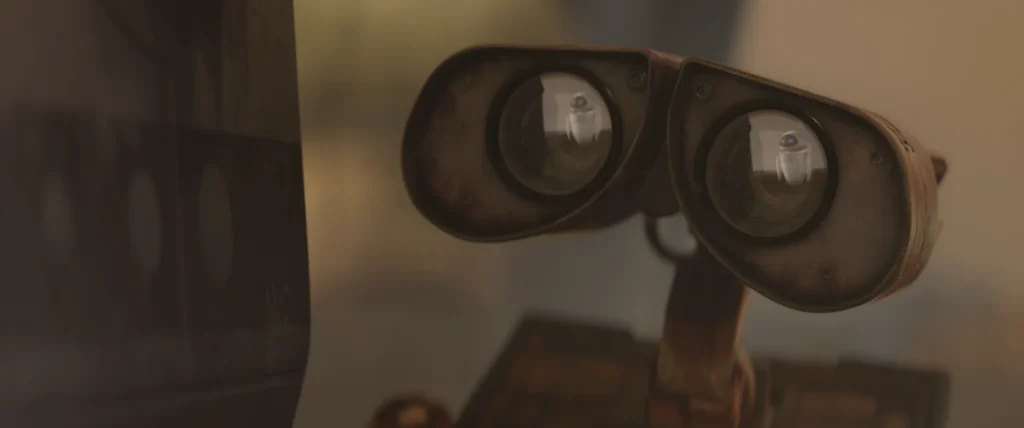
A still image from the Disney Pixar feature animation WALL-E.

Sometimes the line between character animation and technical animation is not clear. A stellar example can be found in our blog post about cinematography, featuring Disney Pixar feature animation WALL-E.

Technical Animation in Marketing and Production

Technical animation isn’t limited to films and games — it’s also a powerful tool in marketing, product design, and industrial visualization.

  • Product Marketing – Exploded views of complex machinery, rotating assemblies, or transparent cutaways can highlight innovation and quality.

  • Training & Instruction – Animations that demonstrate step-by-step mechanical processes for operators and technicians.

  • Concept Visualization – Bringing prototypes and yet-to-be-built machines to life for presentations and pitches.

For high-end advertising, technical animation allows brands to make mechanical products look dynamic and aspirational — whether that’s a luxury car reveal, the inner workings of a camera lens, or a futuristic gadget coming together piece by piece.

Conclusion

Technical animation is about more than just moving mechanical parts — it’s about understanding how those parts would move in reality and conveying that knowledge through motion. It demands the creative eye of an animator, the analytical mind of an engineer, and a constant curiosity about how the world works.

In short, mastering technical animation means learning to make the inanimate not just move — but move with purpose, accuracy, and style.

If you enjoyed this guide, make sure to check out other posts in our blog!

Need help in high-end 3D animation productions? 
Don’t hesitate to get in touch!

Scroll to Top